
The 1986 Toyota Supra introduced the A70 generation, a major turning point in Supra history. In Japan, it was the first generation to use the Supra name domestically, replacing the earlier Toyota Celica XX. In the rest of the world, it was sold as the third-generation Supra, following the A40/A50 and A60 Celica Supra models.
Toyota released the new Supra for nationwide sale in Japan on 6 February 1986. The name itself carried the right mood for a new flagship: Supra comes from the Latin word meaning above or transcending. For Toyota, the A70 was meant to move the car above its Celica XX past and into a more independent grand touring role.
Toyota developed the A70 around the theme of a luxury flagship sports car. It was low, wide, rear-wheel drive and powered only by inline-six engines. The car retained the practical liftback body style, but moved into a more advanced class with four-wheel double wishbone suspension, a long-nose profile, a compact cabin and a more aerodynamic shape than the previous generation.
The development targets were clear: stronger high-speed performance, a more refined sports-car image, improved handling stability and a cabin with the equipment expected from a high-grade grand touring coupe. The 1986 Supra was therefore not just a replacement for the Celica Supra or Celica XX. It was Toyota’s attempt to make the Supra name stand on its own.
The launch range differed strongly by market. Japan received the widest choice, with 2.0-litre GA70 models and a 3.0-litre turbocharged MA70. North America and Europe launched with the naturally aspirated 3.0-litre 7M-GE, but with clear differences in lighting, mirrors, interior trim, rear panels, drivetrain equipment and available options.
Market overview
| Market | Generation context | 1986 engines | Main 1986 trims or grades | Notes |
|---|---|---|---|---|
| Japan | First-generation Supra in Japan | 1G-EU, 1G-GEU, 1G-GTEU, 7M-GTEU | S, G, GT, GT Twin Turbo, 3.0GT Turbo | Broad launch range with 2.0-litre GA70 models and a 3.0-litre MA70 turbo model. |
| North America | Third-generation Supra | 7M-GE | GT | Sold as the 1986.5 Supra GT. Archive registration data includes A70 examples registered as early as January 1986. |
| Europe | Third-generation Supra | 7M-GE | GT | European launch cars used the 3.0-litre naturally aspirated MA70 GT layout. |
Japan: 1986 launch range
The Japanese-market A70 Supra range was the most varied at launch. The 2.0-litre cars used the GA70 chassis code and 1G-series engines. The 3.0GT Turbo used the MA70 chassis code and the 7M-GTEU engine. Toyota positioned the range from the basic S grade through to the 3.0GT Turbo, described in the Japanese model structure as the top-of-the-line special grade.
Japan also received one of the most distinctive period features of the A70: the Panoramic Digital Meter. Depending on grade and equipment combination, Japanese cars could be fitted with a digital dashboard. This was not offered on the North American or European launch models, making it one of the clearest cabin differences between Japanese domestic and export-market cars.
| Grade | Chassis | Engine | Displacement | Induction and valve gear | Maximum output | Maximum torque | Transmission | Positioning |
|---|---|---|---|---|---|---|---|---|
| S | GA70 | 1G-EU | 2.0 litres | Naturally aspirated SOHC | 105 ps at 5,200 rpm | 16.0 kg-m at 4,000 rpm | W57 5-speed manual or A42DL 4-speed automatic | Base grade |
| G | GA70 | 1G-EU | 2.0 litres | Naturally aspirated SOHC | 105 ps at 5,200 rpm | 16.0 kg-m at 4,000 rpm | W57 5-speed manual or A42DL 4-speed automatic | Higher-equipment 2.0-litre grade |
| GT | GA70 | 1G-GEU | 2.0 litres | Naturally aspirated DOHC 24-valve | 140 ps at 6,400 rpm | 16.5 kg-m at 4,600 rpm | W55 5-speed manual or A42D automatic | Sporty naturally aspirated twin-cam model |
| GT Twin Turbo | GA70 | 1G-GTEU | 2.0 litres | Twin turbo DOHC 24-valve with air-cooled intercooler | 185 ps at 6,200 rpm | 24.5 kg-m at 3,200 rpm | W58 5-speed manual or A340E automatic | 2.0-litre twin-turbo performance model |
| 3.0GT Turbo | MA70 | 7M-GTEU | 3.0 litres | Turbocharged DOHC 24-valve with air-cooled intercooler | 230 ps at 5,600 rpm | 33.0 kg-m at 4,000 rpm | A340E automatic | Top-of-the-line launch grade |
1G-EU: the basic 2.0-litre engine
The 1G-EU powered the Japanese S and G grades. It was the entry-level 2.0-litre engine in the A70 range, but it still used electronic fuel injection and was designed around economy, smoothness and everyday drivability. Toyota listed the 1G-EU at 105 ps at 5,200 rpm and 16.0 kg-m at 4,000 rpm.
For the A70, the 1G-EU and 1G-GEU received intake and noise-reduction improvements, including a compact axial-flow air cleaner to reduce airflow resistance and a resin intake resonator. These details helped even the lower grades fit the Supra’s more refined, flagship positioning.
1G-GEU: naturally aspirated twin-cam 24-valve
The 1G-GEU was used in the Japanese GT grade. It brought the 2.0-litre range into twin-cam 24-valve territory, with 140 ps at 6,400 rpm and 16.5 kg-m at 4,600 rpm. Toyota described it as a high-performance engine within the LASRE series, combining the response of a twin-cam layout with good economy and easy handling.
In the Japanese launch range, the 1G-GEU sat between the economy-focused 1G-EU and the twin-turbo 1G-GTEU. It gave the GA70 range a naturally aspirated sports model without moving into the cost, complexity or character of the turbocharged versions.
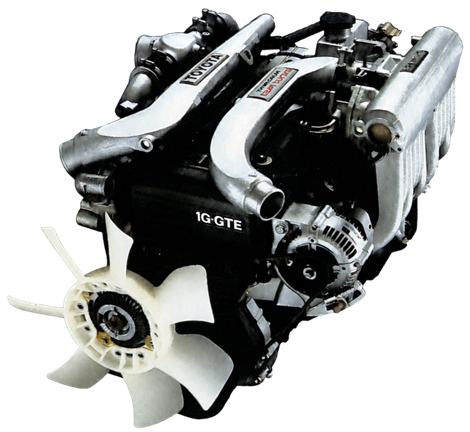
1G-GTEU: the 2.0-litre twin-turbo
The 1G-GTEU powered the Japanese GT Twin Turbo. It was based on the 1G-GEU but added twin turbochargers and an air-cooled intercooler. Output was listed at 185 ps at 6,200 rpm with 24.5 kg-m at 3,200 rpm, giving it the strongest performance in the 2.0-litre class of the launch range.
Toyota designed the twin-turbo system to divide exhaust flow and reduce interference between cylinders, helping the engine use exhaust energy more effectively. The 1G-GTEU also used an intake manifold with different port characteristics for low-speed and high-speed operation, along with knock control and two-stage fuel pump control.
The engine was built for smoothness as well as response. It used a crankshaft pulley with dual dampers, increased crankshaft and cylinder block rigidity, a water-cooled oil cooler and platinum spark plugs. In the A70 range, the 1G-GTEU gave the GA70 its own technical identity rather than making it feel like a smaller version of the MA70.
7M-GTEU: the Japanese 3.0GT Turbo engine
The 7M-GTEU was the top Japanese launch engine. It was a 2,954 cc inline-six with a twin-cam 24-valve cylinder head, turbocharger and air-cooled intercooler. Toyota listed it at 230 ps at 5,600 rpm and 33.0 kg-m at 4,000 rpm.
The engine was developed from the earlier 5M-GEU concept but enlarged and heavily modernised. The 7M-GTEU adopted four valves per cylinder, a pent-roof combustion chamber, turbocharging, intercooling, three-group fuel injection and a compact optical Karman vortex airflow meter. Toyota also used two-stage fuel pump control to reduce fuel discharge under lighter driving conditions.
The 7M-GTEU represented the most powerful 1986 Japanese Supra specification. It gave the A70 a true flagship engine at launch and helped separate the new Supra from the Celica XX that came before it.
7M-GE: the North American, European and Australian launch engine
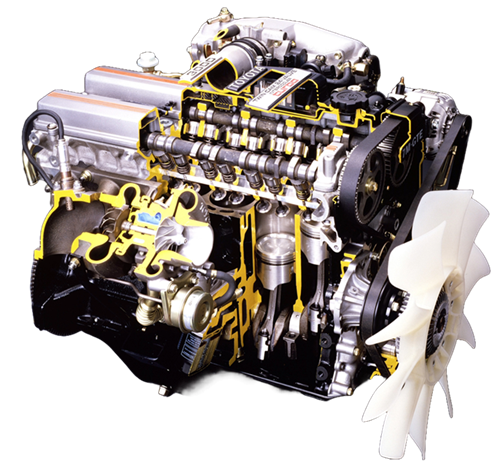
North America, Europe and Australia launched with the naturally aspirated 7M-GE. Like the 7M-GTEU, it was a 2,954 cc DOHC 24-valve inline-six, but without a turbocharger. In North America, output was 150 kW at 6,000 rpm with 196 lb-ft of torque at 4,800 rpm. In Europe, the 7M-GE was listed at 150 kW at 6,000 rpm and 254 Nm at 4,800 rpm. The Australian version was listed at 140 kW at 5,600 rpm and 245 Nm at 4,800 rpm.
The 7M-GE was more than a larger version of the previous Supra engine. It used four valves per cylinder, a cross-flow twin-cam cylinder head, electronic fuel injection and Toyota Computer Controlled System technology. It also used an Intake Air Control System designed to change intake behaviour according to engine speed and throttle opening, improving torque at lower speeds while still allowing strong high-rpm breathing.
This made the 7M-GE a good fit for export-market Supra GT models. It delivered smooth six-cylinder character, strong mid-range torque and the high-speed refinement expected from a grand touring coupe.
North America: 1986.5 Supra GT
North America received the A70 as the 1986.5 Toyota Supra GT. The launch model used the naturally aspirated 7M-GE rather than the Japanese 1G-series engines or the Japanese 7M-GTEU.
The North American Supra GT paired the 7M-GE with either the W58 five-speed manual transmission or the A340E four-speed automatic. It was positioned as a highly equipped grand touring coupe, with electric power seats as standard equipment and USDM-specific features including the optional Super Monitor.
Archive registration data includes North American A70 examples registered as early as January 1986. The 1986.5 label remains the common way to describe the early North American A70 because it replaced the previous A60 Celica Supra partway through the traditional model-year cycle.
| Item | North American 1986.5 GT specification |
|---|---|
| Chassis | MA70 |
| Engine | 7M-GE |
| Grade | GT |
| Body | Liftback |
| Manual transmission | W58 5-speed |
| Automatic transmission | A340E 4-speed automatic |
| Maximum output | 200 hp at 6,000 rpm |
| Maximum torque | 196 lb-ft at 4,800 rpm |
Europe: 3.0-litre MA70 GT
European launch cars used the MA70 Supra GT layout with the naturally aspirated 7M-GE engine. The European GT was available with the W58 five-speed manual transmission or the A340E four-speed automatic.
| Item | European 1986 GT specification |
|---|---|
| Chassis | MA70 |
| Engine | 7M-GE |
| Grade | GT |
| Body | Liftback |
| Manual transmission | W58 5-speed |
| Automatic transmission | A340E 4-speed automatic |
| Maximum output | 150 kW at 6,000 rpm |
| Maximum torque | 254 Nm at 4,800 rpm |
| Australian output | 140 kW at 5,600 rpm |
| Australian torque | 245 Nm at 4,800 rpm |
The European 1986 Supra GT sat closer to the North American GT than to the Japanese domestic range. Both North America and Europe used the naturally aspirated 7M-GE MA70 layout, while Japan offered a broader range that also included 2.0-litre GA70 models and the turbocharged 7M-GTEU 3.0GT Turbo.
Market equipment and visual differences
Several visible and equipment-level differences separated the 1986 A70 Supra by market. These details are useful when identifying original cars, restoring market-correct equipment or comparing parts between Japanese, North American and European models.
| Feature | Japan | North America | Europe |
|---|---|---|---|
| Exterior mirrors | Power folding mirrors | Fixed mirrors | Manual folding heated mirrors |
| Side marker lamps | No North American-style side marker lamps | Front and rear side marker lamps on the body sides | No North American-style side marker lamps |
| Front indicators | Full amber front indicators | Full amber front indicators | Amber and white front indicators |
| Fog lamps | Yellow fog lamps | White fog lamps | Yellow fog lamps |
| Rear fog lamps | Not fitted | Not fitted | Fitted |
| Rear centre panel and licence plate area | Small-plate rear centre section | Small-plate rear centre section | Wide European plate layout; Swiss models used the small-plate rear centre section |
| Steering wheel and shift knob material | Leather steering wheel and shift knob | Leather steering wheel and shift knob | Plastic steering wheel and shift knob |
| Instrument cluster | Digital dashboard available depending on grade and equipment combination | Analogue instrument cluster; digital dashboard not available | Analogue instrument cluster; digital dashboard not available |
| Limited slip differential | Grade-dependent | Optional or grade-dependent | Standard |
| Additional high-mounted brake light | No additional high-mounted brake light | Used on North American cars, depending on trim and specification | No additional high-mounted brake light |
| Front seats | Grade-dependent sports seat equipment | Electric power seats as standard equipment | Sports seat equipment |
| Super Monitor | Not offered | USDM-specific option | Not offered |
| Basic wheel equipment | Japanese basic trim used 15-inch steel wheels | GT equipment specification | GT equipment specification |
| Two-tone paint | Available on GA70 models | Available | Available |
Interior technology
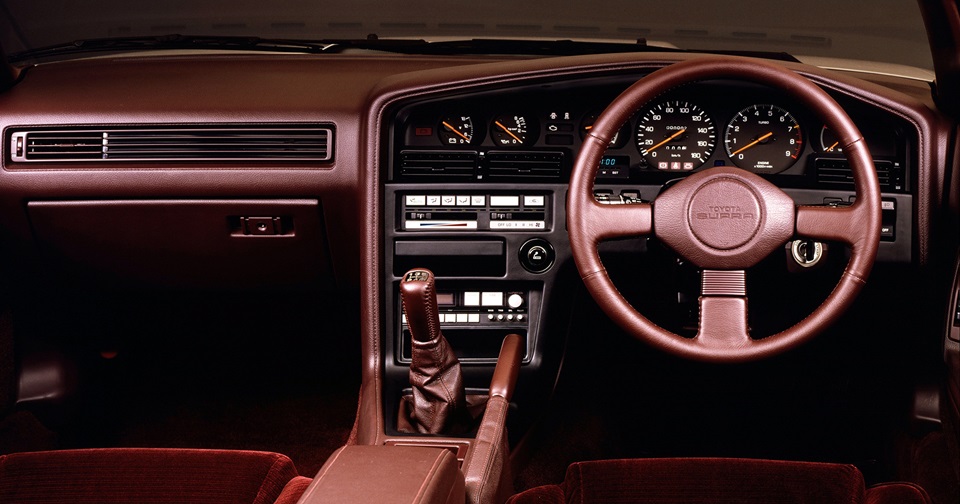
The A70 cabin was designed around the driver, with large instruments and controls grouped close to the steering wheel. Toyota highlighted the tilt and telescopic steering wheel with memory, the new sports seats and the general aim of creating a cockpit that felt more like a flagship GT than a basic sports coupe.
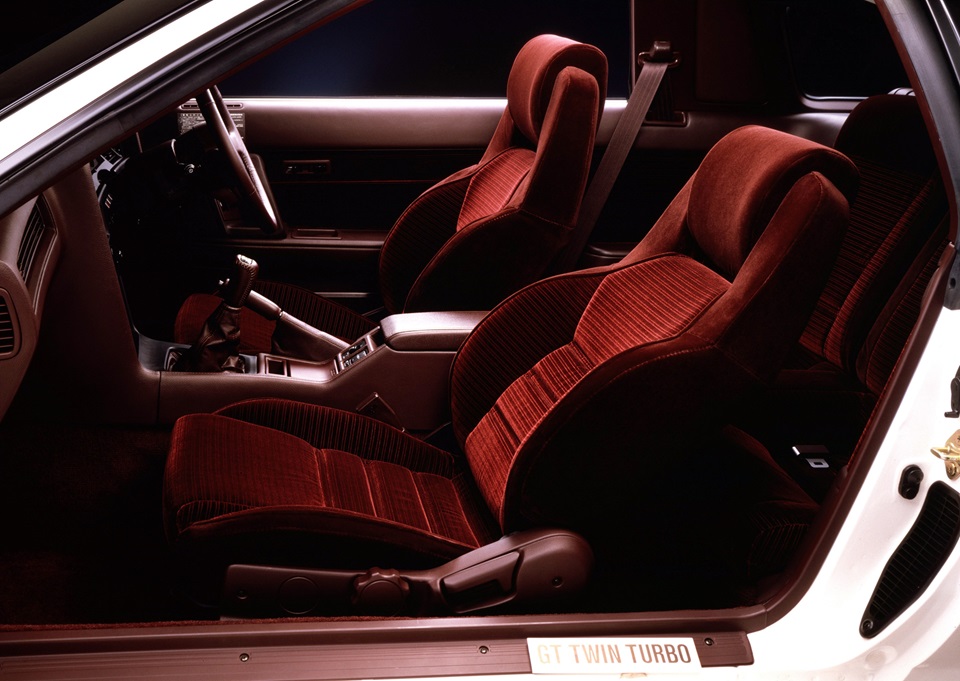
Japan pushed the futuristic side of the car further with the Panoramic Digital Meter. It gave selected Japanese-market cars a cabin character very different from the analogue North American and European models. For restorers and collectors, this makes the Japanese digital dashboard one of the most recognisable market-specific interior features of the early A70.
Chassis and suspension
The A70 Supra used a front-engine, rear-wheel-drive layout with four-wheel double wishbone suspension. Toyota described this suspension concept under the PEGASUS name, with the aim of combining high-speed stability, responsive handling and ride comfort.
All Japanese launch grades used four-wheel double wishbone suspension. Toyota also highlighted forged aluminium upper arms, suspension links mounted to subframes to reduce vibration and noise, and a chassis layout intended to give both precise wheel control and grand touring comfort.
The chassis layout included rack-and-pinion steering, double wishbone front and rear suspension and ventilated disc brakes. Front discs were ventilated across the Japanese range, while ventilated rear discs were used on higher grades. ABS was available as an option for the Japanese 3.0GT Turbo.
TEMS, Toyota Electronic Modulated Suspension, was part of the A70 technology story, although availability depended on market and specification. Together with the new suspension layout, it helped define the A70 as a more advanced grand touring car rather than a simple continuation of the A60.
Body and styling
The A70 retained the liftback body shape but gave it a sharper, lower and more aerodynamic form. Toyota emphasised the long nose, compact cabin, steeply slanted windshield, wide stance and large rear glass area. The result was a shape that still looked like a Supra, but clearly belonged to a newer and more technical era.
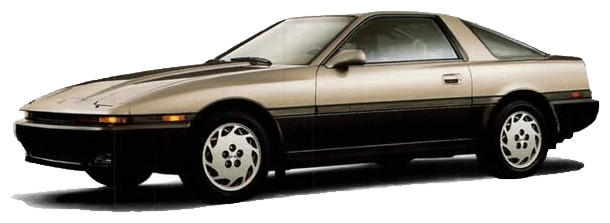
The Japanese 3.0GT Turbo was quoted with a drag coefficient of 0.32. Combined with the wide body lines, flush front lighting and clean rear liftback profile, the 1986 Supra had a stronger flagship identity than the Celica XX it replaced in Japan and the Celica Supra it replaced in export markets.
The launch-year story did not stop with the fixed-roof liftback. Toyota’s Japanese model history records an Aerotop model (Named sport roof in all markets outside of Japan) with a detachable front roof added in June 1986, giving the A70 another body style association that would become part of the generation’s identity.